
Get Groovy!

‘It’s easy for you to be happy at work – you have a great job!”  Jerry meant what he said. Somehow happiness was out of his reach, he believed.  And, he seemed to think, the kind of job you have is related to your happiness potential.

A month ago, I started really focusing on people who are happy at work.  Everywhere I go, I pay attention to who is around me.  And, I am documenting those who appear to be happy in their workplace.  Here you can see the shining face of Suk-Kea Lim from the Greenwood Inn in Winnipeg, Manitoba.  One look at her beautiful smile and you know that Suk-Kea is a happy person.  Well, guess what her ‘job’ is?  Certainly not a glamorous one by most standards, but one Suk-Kea does extremely well, with great care, and with a fantastic attitude.

So, what’s the difference between Suk-Kea and Jerry?  How can Jerry – and any of us, for that matter – achieve happiness at work?

We can begin by believing that it is possible.  In fact, we can begin by believing it IS (a fact, a truth, ‘reality’).  As long as Jerry believes that his reality is that he has the kind of job at which happiness is an illusion, he’ll continue to create that experience for himself.  He’ll be oblivious to the opportunity for happiness that is present around him every day.

Check out this video of Sugathapala, who lives in Sri Lanka.


Now that is what I’d call a happy dude!  Even though the job he is in now might not be the job he would have ideally chosen for himself, he is rockin’ it!  And listen to him as he describes the choice he is making.

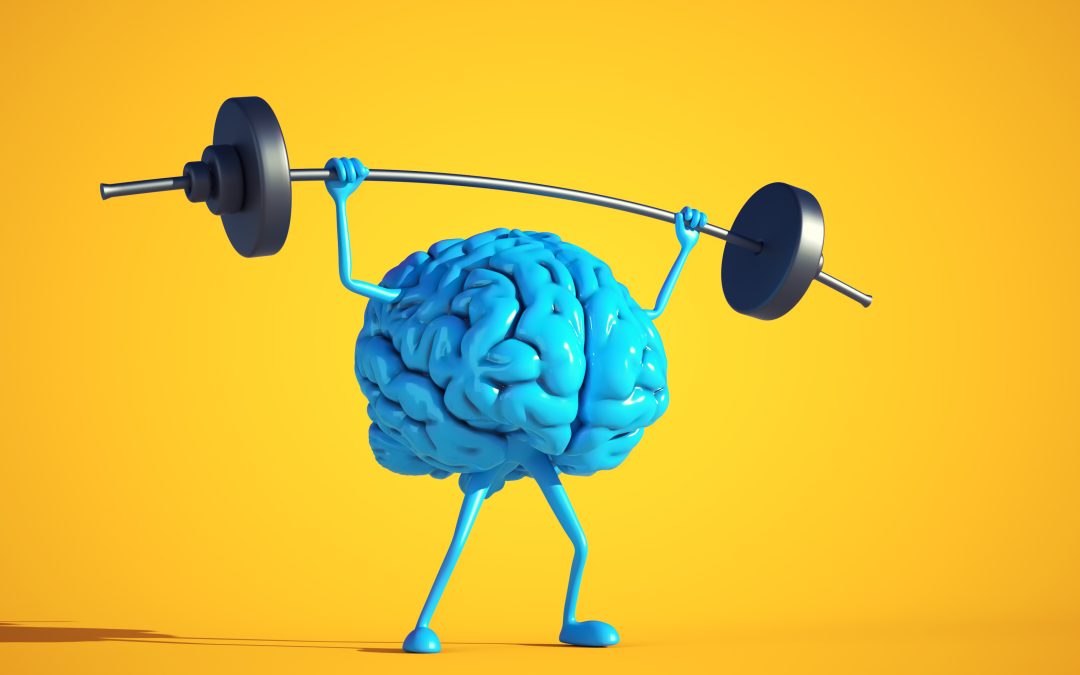
Interested in creating more happiness at work?  It starts by changing your thoughts.  It starts by moving out of your thinking ruts, and into a new thinking groove.  Here are some examples:

  • Instead of thinking’ TGIF (thank god it’s Friday)’; think ‘TGIM (thank god it’s Monday)’.
  • Instead of thinking ‘Happy Hour begins at 5:00 p.m.’; think ‘Happy Hour begins at 9:00 a.m.’.
  • Instead of thinking ‘This job sucks’; think ‘I can look at this job in a whole new way’.
  • Instead of thinking ‘My boss does not appreciate me, he gives me no feedback’; think ‘My boss trusts me to do a good job’.
  • Instead of thinking ‘When I get a new job, then I will be happy’; think ‘When I am happy, I will likely get a new job’.
  • Instead of thinking ‘I cannot wait to retire’; think ‘I am grateful for this day’.

Embrace today, be mindful, shake things up, and change your thoughts to change your results.  You do indeed get what you expect, and you grow that to which you attend.

According to Ellen Langer, a Harvard Psychology Professor, “Wherever you put the mind, the body will follow”. “It is not our physical state that limits us,” she explains—”it is our mindset about our own limits, our perceptions, that draws the lines in the sand.”

Why can’t workplaces be filled with positive, happy, productive, groovy people?

Why can’t we, as Langer suggests, notice new things, relinquish preconceived mindsets (ruts), and then act on the new observations (grooves)?

I’d love you to join the Groove Community by sharing photos (of you, of your team at work) and stories of how you stay happy (and mindful) at work. Email me at deri@derilatimer.com and look for your story on the Groove Community page (coming soon).

Deri Latimer is an expert in re-energizing the workplace! She is one of fewer than 10% of speakers globally who hold the designation of CSP (Certified Speaking Professional).  Deri combines a business degree with experience in government, health care, manufacturing, education, mining, transportation, agriculture, tourism, and the professional services sectors. Deri impacts individuals and organizations by offering practical strategies to move from overwhelmed to resilient, from absence to presence, from stuck to productive, and from exhausted to energized! 

 A film by Mike Worsman.

Video from KarmaTube

I Am Grateful For You!

Today is the United Nation’s International Day of Happiness!

The pathway to happiness is paved with the practice of gratitude.

What are you grateful for today?  Right now?

I am grateful for you!!

Thank you for being a part of the Groove Community!


Deri Latimer, B Mgt, CSP, is an expert in positive possibilities for people! She is one of fewer than 10% of speakers globally who hold the designation of Certified Speaking Professional. Deri combines a Business degree in Human Resources with experience from business sectors including health care, manufacturing, education, agriculture, government, mining, transportation, tourism, and professional services. Deri provides practical strategies for positive mental health ‘at work’; impacting individuals and organizations to increase resilience to change, energize engagement with the organization, and propel meaningful performance results that last!  www.derilatimer.com

Love Where You Work

This was the theme for my client’s AGM (Annual General Meeting) and Staff Event: Love Where You Work.  Now, that’s the kind of organization I’d want to work with – one that chooses that sort of a theme.

The main keynoter was Jian Ghomeshi, host of Q on CBC Radio.  Jian shared a humorous glimpse into his journey of loving where he works; including some musings about an Iranian father who might at one time have preferred Jian be a doctor, lawyer or some other more worthy profession than the one that was drawing Jian’s interest (especially the early career as a singer, songwriter, and musician, with multi-platinum selling folk-rock group, Moxy Früvous).

During his keynote, Jian shared some of his observations about the prominent international figures – from prime ministers to sports stars and cultural icons – he has interviewed over his many years in broadcasting, including Woody Allen, Paul McCartney, Neil Young, Van Morrison, Salman Rushdie, Barbara Walters, Tom Waits, William Shatner, Jay-Z, Al Gore, Margaret Atwood and – in a television world-exclusive — Leonard Cohen.  A pretty impressive resume, for sure.

Jian’s observations about successful people were that they:

1) Love Where They Work/What They Do

2) Work Really, Really, Really Hard (I am paraphrasing the colorful language Jian used here)

3) Are Patient and Persist In Moving Forward Toward What They Want

4) Have Self-Doubt, Like The Rest Of Us

As I listened to Jian, I reflected on the session I had just finished delivering to the staff;  mine was on the Power of Optimism. I saw a tremendous amount of congruence between Jian’s message and mine.

Optimism is a perspective; it is a choice about what you decide to say to yourself – particularly following times of adversity.  And, the choice changes everything.  Martin Seligman calls this your “explanatory style”.  In his book, Learned Optimism, he maps out what his research has discovered are The Three P’s of Pessimism: Permanence, Pervasiveness, and Personal.

Let’s say you have just discovered that you were not successful in achieving a job for which you applied. If you are a Pessimist, you might say to yourself: ‘I am NEVER going to get ahead, NOTHING ever goes my way, it’s MY FAULT, I’M NOT GOOD ENOUGH.’  I think we can all agree, this kind of explanatory style will surely kill your motivation and overall sense of well-being.

When I read Seligman’s book, I was left wondering … what about The Three O’s of Optimism?  Where are they?  I could not find them in Seligman’s book – or elsewhere – so, I decided to make them up myself.  The Three O’s of Optimism are: Occasion, Opportunity, and Ownership.

If you take the same scenario above, not being selected for a job for which you applied, as an Optimist you might say to yourself: ‘This was not THE TIME for me to move on, SOMETIMES I am not selected for the job for which I apply, the interviewer thought someone else was a BETTER MATCH and I KNOW I WILL SUCCEED in the future so I’ll make sure I demonstrate my skills as clearly as I can.’  This explanatory style will likely help you to take positive action to get the job that you want, to persist.  You might get feedback on your interview skills, revamp your resume, and you will surely keep applying for jobs for which you believe you are suited.

The key is, the explanatory voice is your voice — you control it, and you can change it.

What’s also very important about your explanatory style is that it is directly connected to how you FEEL. How do you want to feel? Hopeless or Hopeful?  Negative or Positive?  Engaged or Disengaged?  Motivated or Exhausted? I think the answer is clear.  Feeling good – at work and in life – is just better for you (and for everyone else around you).  Seligman provides lots of evidence on the power of an optimistic perspective: it prevents depression, increases productivity, increases happiness, and increases life expectancy. Hmmm…seems like a no-brainer (actually, a brain-changer) to me!

I ended my presentation talking about a little initiative I have undertaken. As I go through my life, I am taking pictures of really amazing, happy, engaged people at their workplace; in the grocery store, at the gym, in hotels, at my mom’s personal care home, etc.  It has been a wonderful experience – and I am astonished and thrilled that not one person has answered ‘no’ when I have asked to take their picture. They have all smiled brightly and broadly, and given me their name — even though many of them have never met me before.  Stay tuned and I will share the collage in future blog posts – and if you are such a person, or know such a person, I would love it if you send me a picture to add to the growing movement to demonstrate that engagement, joy and motivation are alive and well in the workplace!  (Email pictures – of individuals or whole teams – to me at deri@derilatimer.com.)

Now go – love where you work!

Deri Latimer, B Mgt, CSP, is an expert in positive possibilities for people! She is one of fewer than 10% of speakers globally who hold the designation of Certified Speaking Professional. Deri combines a Business degree in Human Resources with experience from business sectors including health care, manufacturing, education, agriculture, government, mining, transportation, tourism, and professional services. Deri provides practical strategies for positive mental health ‘at work’; impacting individuals and organizations to increase resilience to change, energize engagement with the organization, and propel meaningful performance results that last!  www.derilatimer.com


Are You Sociable?

I admire my daughter.  She is a lovely person – who loves people…she is, what I would call, sociable.  She is also one of the happiest people I know.  I believe she is the truly flourishing.

I am continually curious about what contributes to human flourishing. I’ve certainly read extensively on the topic, and have noted some commonalities.  The most notable, and likely first source for me, was Martin Seligman, who developed the PERMA Model.  PERMA stands for the five essential elements that contribute to the experience of lasting well-being: Positive Emotion, Engagement, Positive Relationships, Meaning, and Achievement or Accomplishment.  We can all likely agree that each of these contribute to overall well being and happiness.

It wasn’t until I looked closely at C. L. Keyes’s 13 Dimensions of Flourishing that I realized just how much being sociable matters to well-being, flourishing, and overall happiness.  Read over the list below.  At least half of the items are directly linked to being sociable, and the rest are dependent on social factors.  As you peruse the list, think about how they relate to you.

Keyes’s dimensions are:

1. Regular Affect–appears regularly cheerful, interested in life, in good spirits, happy, calm and peaceful

2. Avowed Quality of Life–expresses high satisfaction with life

3. Self-Acceptance–holds positive attitude toward onself

4. Social Acceptance–holds positive attitudes toward others

5. Personal Growth-shows insight into own potential and development

6. Social Actualization-believes groups can evolve positively

7. Purpose in Life–holds goals and beliefs that affirm a sense of direction and meaning in life

8. Social Contribution–feels that one’s life is useful to society

9. Environmental Mastery–can manage complex environments

10. Social Coherence–is interested in society or social life, believes they are intelligible and meaningful

11. Autonomy–exhibits self-direction, resists unsavory social pressures

12. Positive Relations with Others—has warm, satisfying, trusting personal relationships

13. Social Integration–enjoys a sense of belonging in a community, comfort and support from others

Each of these, as with Selgman’s PERMA Model are also very congruous with Emotional Intelligence. Reuven Bar-On’s Model includes 5 realms and 15 competencies…and likewise the competencies are highly ‘sociable’.  They are Intrapersonal (emotional self-awareness, self-regard, assertiveness, self-actualization, independence), Interpersonal (empathy, interpersonal relationships, social responsibility), Adaptability (problem solving, flexibility, reality testing), Stress Management (stress tolerance, impulse control), and General Mood (optimism, happiness).  If they don’t seem directly social, my experience with EI is that one’s awareness about personal competencies is highly dependent on attending to information from the social world (i.e. your first indication of how well you manage your emotions, is likely found on the expressions on the faces of others around you).

My daughter has taught me a lot about flourishing and well being.  Even though she has personally experienced some tough times in the social realm of life (bullying and social exclusion), she has incredible resolve and belief in the power of social connection.  I learn by watching and listening to her.

Who are the role models for you?  What have you noticed about those individuals, and what lessons can you apply to your own life?

Here is a little experiment that you might be interested in pursuing. There are 13 items on the Keyes list. There are also 26 (2X13) bi-weekly periods in a year.  Start at the top of the list.  Focus on that one area for two weeks.  During each two week period, tune in daily.  Ask yourself how you are doing in that area, dig deep, and query about what you might be able to do to enhance that area in your life.  Better yet, buddy up with someone and add a little sociability to the exercise! Then, after two weeks, move on to the next item.

I wonder how ‘well’ you’ll ‘be’ at this time next year.  And, you know, I’d love to hear from you.  Now, go…get sociable!

Deri Latimer, B Mgt, CSP, is an expert in positive possibilities for people! She is one of fewer than 10% of speakers globally who hold the designation of Certified Speaking Professional. Deri combines a Business degree in Human Resources with experience from business sectors including health care, manufacturing, education, agriculture, government, mining, transportation, tourism, and professional services. Deri provides practical strategies for mental health ‘at work’; impacting individuals and organizations to increase resilience to change, energize engagement with the organization, and propel meaningful performance results that last!  www.derilatimer.com


S.N.A.P. into Holiday Fun!

Max as Rudolph

It’s the holidays!  For some of us, getting to a sense of fun and joy at this time of year is easy.For others, rather than ‘Yipee, what fun!’, you might be thinking ‘Bah, humbug!!’.

Here’s a little holiday acronym to help you S.N.A.P. into Holiday Fun!

S - See Yourself

Take a moment and close your eyes.  Create a picture of the kind of person you want to be for the holiday season.  What are you doing?  What are you saying?  What are you seeing?  What are you feeling?  What do others see when they look at you?  Spend some time creating the most clear and compelling picture possible of the desired holiday-you.

N – Navigate a Path

Now that you have a clear picture of your holiday self, think about what ‘story’ the holiday-you might be ruminating on. What are your dominant thoughts?  What are you focusing on?  What are you saying to yourself ?  What feelings are most prevalent for holiday-you? What is holiday-you doing?

A – Assume Control

Make a decision to choose holiday-you.  Each morning recall your picture…and keep adding detail to it. Keep thinking, seeing, hearing, feeling and behaving like holiday-you.

And, when something happens that seems to be encroaching on your holiday fun, assume control by choosing to A.C.T.Accept your current situation, Choose a vision of what you want in that moment, and Take action to achieve your vision.

For example:  Let’s say you are merrily preparing for holiday company to arrive.  You’ve cleaned the house, you’ve carefully selected your favorite holiday sweater to wear, and you are just about to take the souffle out of the oven.  Suddenly, everything changes.  The souffle falls, the dog comes running in with dirty paws, and you turn around to notice the mess the kids have made doing holiday crafts in the living room.  You then remember to A.C.T.  You say to yourself, ‘I accept that things are not perfect, as I had hoped (A).  I want to enjoy our company when they arrive, and serve the rest of the food with pride (C). I will smile, breathe, remind myself that I’ll have a better time if I relax, ask the kids to engage in a contest to see who can follow the dog and clean his paws the fastest – for a fresh cookie treat, and hang the new craft project on the fridge (T).

P – Press On

There will be challenges along the way – both big and small.  Remind yourself to keep them in perspective, and to focus on all the positive aspects of the holidays.  And jump in to ‘play’ a game or two.  If FUN were an acronym, it might mean Fierce, Uninhibited, Nonsense.  It’s supposed to be silly.

Last year we played a game at a family dinner over the holidays.  We were divided into teams and each team received a pair of panty hose and a package of small balloons.  We were told to create Rudolph using just the supplies we had – and the first team to finish was the winner.  The photo at the top of this post is my son Max modelling our team’s creation.  I cannot remember if we won or not, but I definitely remember that we had fun!

Today a colleague posted this video on facebook.  I cannot resist sharing it with you here.  Another strategy to S.N.A.P. into Holiday Fun is to look for what’s good about the holidays.  This video felt so good to watch, especially after the very sad report that we all heard yesterday from Connecticut.  It restored my faith in humanity, and I hope it does the same for you.

My wish for you this holiday season is simple…choose to be HAPPY.  Hold your loved ones near, Appreciate them, Participate in life, Practice kindness, and Yuck it up as much as you can!

Deri Latimer, B Mgt, CSP, is an expert in positive possibilities for people! She is one of fewer than 10% of speakers globally who hold the designation of Certified Speaking Professional. Deri combines a Business degree in Human Resources with experience from business sectors including health care, manufacturing, education, agriculture, government, mining, transportation, tourism, and professional services. Deri provides practical strategies for mental health ‘at work’; impacting individuals and organizations to increase resilience to change, energize engagement with the organization, and propel meaningful performance results that last!  www.derilatimer.com


Get Some Post-Traumatic Growth – Skip the Trauma!

Palliative nurses have discovered that there is some commonality among us all when we are on our deathbeds…they have listened and developed this list of the Top 5 Deathbed Regrets.  They are:

1.  I wish I’d had the courage to live a life true to myself, not the life others expected of me.

2. I wish I didn’t work as hard.

3. I wish I’d had the courage to express my feelings.

4. I wish I had stayed in touch with my friends.

5. I wish that I had let myself be happier.

This is the kind of list that causes at least a moment or two of contemplation.

I was reminded of this list as I watched a TED talk by Jane McGonigal.  Jane is a game designer, and she is one smart girl. In her TED Talk ‘The Game That Can Give You 10 Extra Years Of Life’, she talks about something called Post-Traumatic Growth (PTG).  Unlike Post Traumatic Stress (PTS), PTG happens when you experience some traumatic event and come out the other end having been changed for the better.  It’s like you are on your deathbed, you express your regrets, then you get a second chance at living life the way you ‘wished’!  (And you actually do it!!)

Many of you have examples of this from your own life.  Someone important to you became ill or died and after that you dedicated your life to a cause that was either dear to this person, or was associated with their illness or death.  You suffered grave harm at the hand of another person, and you have decided to speak out to help prevent other potential victims from experiencing the same consequences that befell you.  You know what I mean…something bad happened, and you became better (happier, healthier) because of it.

Jane experienced a traumatic brain injury, and for three months she lay in bed…wanting to die.  In her talk, Jane shares her story…and how it lead to her own Post Traumatic Growth.   She also shares how we can all have the benefits of Post Traumatic Growth, without having to experience near death or significant trauma!  She describes 4 strengths or habits of resilience that allow that to happen!

First: Physical Resilience

You can develop physical resilience by – every day – getting up and moving every hour.  Yup, it is that easy. Take the stairs and skip the elevator.  Do something with your body and notice what happens.  Something else you can do – that is even more fun – is to regularly standing up and fire your fists in the air in a victory or triumph stance (you’ll feel so totally awesome doing this – don’t worry how you look!)

Second: Mental Resilience

There are many ways to develop mental resilience.  Jan invites you to count backward from 100, by 7 – or snap your fingers 50 times.  Small activities like this help you to build focus and willpower, and increase your mental resilience. Another strategy sure to increase your mental resilience is a daily practice of meditation.  The Chopra Centre is starting a new 21-Day Meditation Challenge on November 5 – this might be your invitation to begin your life-changing practice.

Third: Emotional Resilience

For emotional resilience, Jane encourages you to look at a picture of your favorite baby animal.  This strategy shows you that you can evoke strong emotions at will – just by changing what you focus on.  Jane reminds us of the 3:1 ratio that Barbara Fredrickson explains in her book Positivity; for human beings to flourish, we need 3 positive emotions for every negative emotion we experience.   I know that all I had to do was look at these pictures of my niece and nephews and I had huge amounts of serotonin coursing through my brain!!  They definitely evoke strong positive emotions in me!  (Be on the lookout for these scary creatures tomorrow at dusk!!)

Photo

Photo


Fourth: Social Resilience

Send a text to someone you care about – thanking that person for something they add to your life.  Or, if you are right now standing in a long line at the grocery store, take time to turn and engage in some friendly banter with the person behind or beside you.  We all get more strength when we connect with others.  Connecting with another person increases oxytocin in the brain – and oxytocin is central to developing trust in another person.  Trust is the foundation of social resilience.

Check out Jane’s talk when you have an extra 20 minutes.  It’s well worth it!


So tell me…isn’t PTG better without the T????  Have you got a story to share?

Deri Latimer, B Mgt, CSP, is an expert in positive possibilities for people! She is one of fewer than 10% of speakers globally who hold the designation of Certified Speaking Professional. Deri combines a Business degree in Human Resources with experience from business sectors including health care, manufacturing, education, agriculture, government, mining, transportation, tourism, and professional services. Deri provides practical strategies for mental health ‘at work’; impacting individuals and organizations to increase resilience to change, energize engagement with the organization, and propel meaningful performance results that last!  www.derilatimer.com

Gratitude Grows

When you spend even a moment in gratitude, the ripple effects can be astounding. 

Consider this note I just received:

Hi Deri:
I attended a seminar you led recently. I enjoyed it, and got a lot of good stuff from the whole day, but wanted to share my favorite part of it, and the outcome. You asked each of us to write a gratitude letter at the end of the seminar. I chose to write my husband, and filled one side of the orange paper with things I appreciate about him. We were heading out immediately after to visit our daughter and her family in another city for the long weekend, so I didn’t give it to him until I saw it in my purse…good thing it was orange!!   I gave it to him on the weekend, while we were still visiting there.  He read it, gave me a big hug, and said he really thought it was nice.
 
That would have been a fine ending, but it gets better. He works away during the week in a town about 3 hours away, so we chat each evening about our day.  He told me that he had been having supper with a good friend, and found the orange paper in his pocket. He gave it to his friend, to read.  The man was visibly emotional, gave my husband a hug, and said that he wished that he had what we, as a couple, obviously had.
 
This moved me for many reasons…my husband had the paper with him…so it meant something to him.  He wanted to share it with a friend, who further affirmed how special it was…and the fact that two men who respect each other really had a moment of communication that went way past the surface.
 
Thanks Deri, for inspiring that wonderful moment, and for all the warm fuzzies I have had thinking about it!

Is that cool, or what??!

It amazes me, whenever I do an exercise like that, just how powerful moments of gratitude can be; and how they can grow.  If you are interested in reading more, you can find all sorts of articles on the power of gratitude online, in places such as Positive Psychology News Daily and Psychology Today.   

I had another ‘moment’ just the other day.  My brother posted a video of my grandmother (who died several years ago at the age of 97) speaking about what her life was like in the 1930′s raising three boys in small (rustic) northern Manitoba towns.  It may not be riveting video to the general population, but it sure was to me.  I paused and reflected on how grateful I am to have had such a wonderful role model in my life. 

That’s not the best part, though!  The best part is seeing all the comments that soon attached to the video.  A whole bunch of people, who knew my grandmother as a teacher (and general character around town) commented on what my grandmother meant to them, and how happy they were to know her (a little moment of gratitude for them too!).  This one especially stood out for me:

I remember when we were kids, we used to wait after school got out for the grades one and twos so we could hold her hand on the walk home…She made us take turns so no-one got left out.  

That about summarizes my grandma.  Although life was tough and she had her share of heartache, she always focued on what she could do for others, and on all the blessings she quickly saw in life. 

So, try it out.  Take a few minutes and write a gratitude letter to someone in your life.   Tell him or her what you appreciate most, and what impact he or she has had on your life.  That person will totally love it!  And, you might never know who else will benefit from your letter.  After all, gratitude grows!

Deri Latimer, B Mgt, CSP, is an expert in positive possibilities for people! She is one of fewer than 10% of speakers globally who hold the designation of Certified Speaking Professional. Deri combines a Business degree in Human Resources with experience from business sectors including health care, manufacturing, education, agriculture, government, mining, transportation, tourism, and professional services. Deri provides practical strategies for mental health ‘at work’; impacting individuals and organizations to increase resilience to change, energize engagement with the organization, and propel meaningful performance results that last!  www.derilatimer.com


Holding On and Letting Go

I was a bit cranky this week.  While it could be due to several things (hormones, late summer nights, preparing for a new school year, etc.) I wondered why I was feeling a little ‘edgey’.  

My daughter started university a few days ago.  She is – in addition to being smart, kind  and beautiful - a very independent woman.  Of course, I am happy about that.  So why was I cranky, then? 

At the end of her first day on campus, I was excitedly waiting at home for her to arrive and tell me all about her adventures.  I was actually peering out the front window waiting for her to walk down the street.  (I haven’t ‘peered’ out the window since she and my son were very small, and I was worried about traffic, bullies or other harmful forces in the universe.)

Time passed and she did not arrive.  Instead, I got a text from her saying she was meeting friends and would be home later.  

I realized that – while I was anticipating sharing in the experience of her first day, she wasn’t rushing home to tell me all her stories…she was rushing off to share those with friends. 

Now, it’s not the first time I have realized I am not forefront in my children’s minds (nor do I even think it is healthy that I would be) – it just ended up being a really BIG time!  And, I felt a bit ‘off’ for a time.

I realized it was because I was focusing on what I thought I was losing, and not on what I was gaining. 

Just like the video below demonstrates, we all notice exactly what we are focusing on — and we also miss that which we are not focusing on. 

Sometimes, as parents, we both want to be needed, and we want our children to be independent.  It’s also true for leaders and our staff members.

What I realized is that we can have both.  It’s not either/or, it’s ‘and’.

We can hold on to the realization that we have created the conditions around which our child (or staff member) can be independent, and we can let go of our old belief that people only need us when they depend on us.

That’s exactly what our purpose is…as parents and leaders…to create conditions for success.  And a part of that is to both hold on and let go.

As you look at the next year in your life, what will you focus on?  What will you hold on to…and what will you let go?


Thanks, Kids!

Every year, at this time around Mother’s Day and Father’s Day, a conversation takes place in homes everywhere.

It goes something like this:

‘Why is there a Mother’s Day and a Father’s Day every year?  Why isn’t there a ‘Kid’s Day’?’

You know the typical response.

‘Because EVERY DAY day is Kid’s Day!!’

Sound familiar?

Well, maybe we ought to consider REALLY making every day ‘Kid’s Day’.  They are, after all, helping us to be happier and healthier!

In today’s issue of the The University of California, Riverside Highlander, Dean Mayorga reports that “a series of studies conducted by researchers from UC Riverside, Stanford University and the University of British Columbia have found that parenting is associated with higher feelings of happiness and “meaning” than non-parents. ”

Combine that with everything we are learning about the importance of gratitude, like an article in the Washington Times yesterday, research is showing that gratitude is proving to be a key component of health.  In one study,  Dr. Robert Emmons divided his study participants into three groups.  He asked one group to write down what they were grateful for, another group to note their gripes, while a third to note anything that was notable to them.  Emmons discovered, writes Eric Nelson, “that those in the gratitude group generally felt better about their lives, were more optimistic about the future and reported fewer health problems than the other participants.”

The gripes can be the easiest to notice – most of us know that already (and that can be particularly true for parents).  Well, the good new is, that can be changed!  Emmons’ studies show that people who regularly (daily) practice gratitude reap the greatest rewards – and, like other discoveries in neuroscience about how much more control we have over our thoughts, feelings, and behaviors – there is evidence that you can increase your ‘gratitude meter’ with regular practice!

So, get out there and thank your kids … today and every day!

And, do not fear, non-parents!  You can still benefit by expressing gratitude to anyone in your life that matters to you (any ‘meaningful’ relationship works!).  Even if you do not tell them (although that is a very good idea), make note of your gratitude in a journal…and you’ll reap the same health and happiness rewards as we grateful parents!

Deri Latimer, B Mgt, CSP, is an expert in positive possibilities for people! She is one of fewer than 10% of speakers globally who hold the designation of Certified Speaking Professional. Deri combines a Business degree in Human Resources with experience from business sectors including health care, manufacturing, education, agriculture, government, mining, transportation, tourism, and professional services. Deri provides practical strategies for mental health ‘at work’; impacting individuals and organizations to increase resilience to change, energize engagement with the organization, and propel meaningful performance results that last!  www.derilatimer.com


A Piece of the Dalai Lama’s Mind

This blog post is a short one.  Arianna Huffington interviews the Dalai Lama and he references the importance of emotions in overall health.  And, more importantly, how the emerging research in neuroscience is helping us to discover how to ‘change our mind’ and our life.  I totally want to hang out with this guy!!  Enjoy!

Deri Latimer, B Mgt, CSP, is an expert in positive possibilities for people! She is one of fewer than 10% of speakers globally who hold the designation of Certified Speaking Professional. Deri combines a Business degree in Human Resources with experience from business sectors including health care, manufacturing, education, agriculture, government, mining, transportation, tourism, and professional services. Deri provides practical strategies for mental health ‘at work’; impacting individuals and organizations to increase resilience to change, energize engagement with the organization, and propel meaningful performance results that last!  www.derilatimer.com